Sound & Somatics FACILITATOR Training
Science & Soul. • Mystery & Method.
SOUND & SOMATICS is an immersive training in the art of sound-led, embodied facilitation. Blending online learning with an intimate in-person immersion, Level One develops the presence, perception, practical skill and embodied confidence to guide complete sound-led experiences of your own.
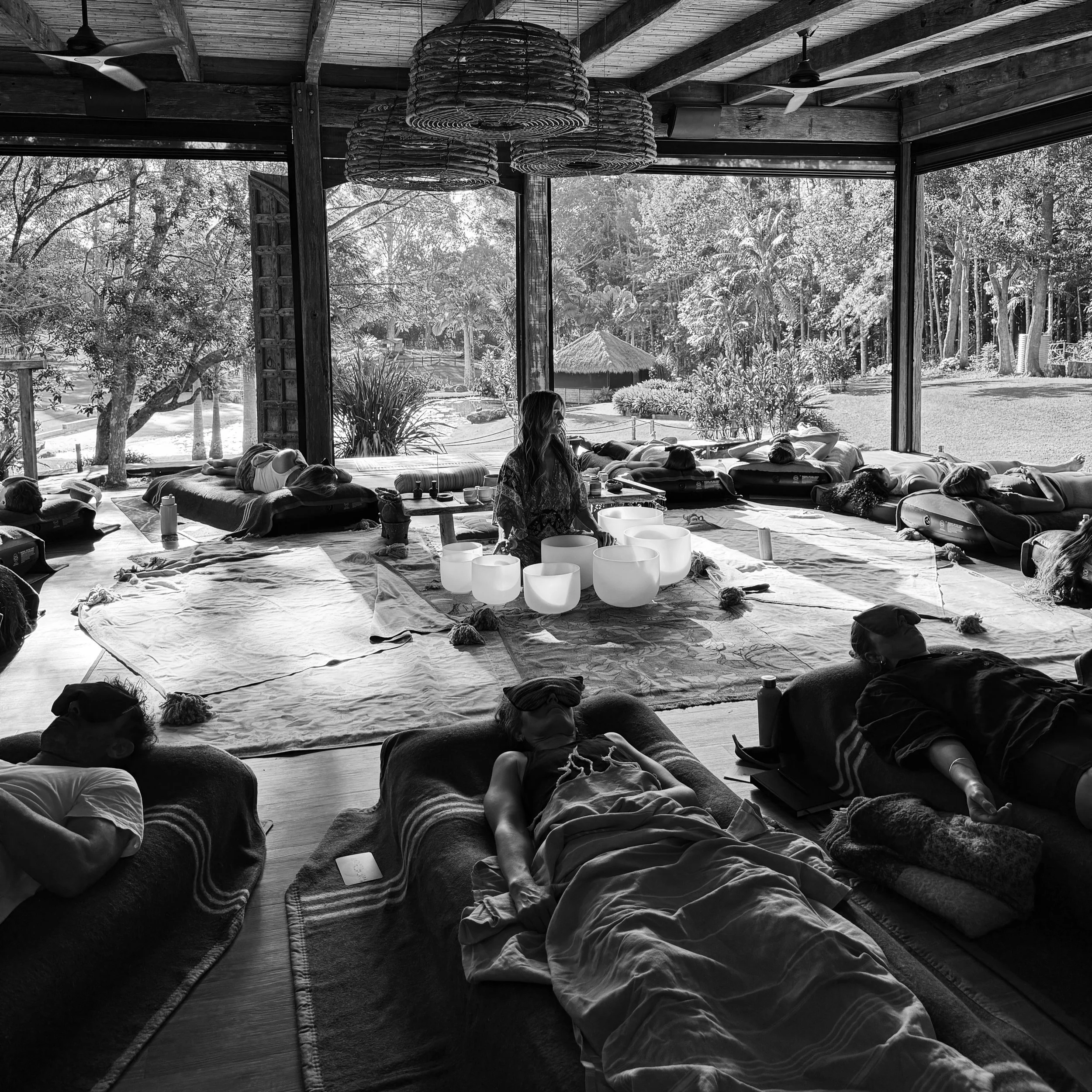
You’ve felt what’s possible in these spaces…
The shifts. The depth that can open when seemingly so little is happening. The unmistakable sense that there is more happening here than meets the eye. And perhaps something in you recognised: I don’t only want to receive this work. I want to learn how to hold it. To create spaces where people can arrive more fully, listen more deeply and heal in harmony with nature. So how do you actually guide an experience like this?
Most sound trainings begin with the instruments.
This one begins with the you.
Because before you learn to work with an instrument, you realise—perhaps with some wonder—that you are one. The bowls are part of the conversation.
They are not the facilitation.
Sound is the doorway.
Facilitation is the deeper practice.
“The curriculum and experience has changed the way I move through and hold space for people around me.”
— Emma
“I now have the practical tools and inner confidence to lead a sound bath safely and authentically.”
— Kerrie“I knew in my heart that this was the course I needed to do. I signed up and booked my tickets from Auckland without hesitation.
From the moment I committed, something massive within me began to shift. Week after week, through the online sessions, more and more layers began to release.”
— Loren
“One of those experiences that you walk away from not being able to describe it as it was so amazing!!”
— Emma
How the Training Unfolds
How the Training Unfolds
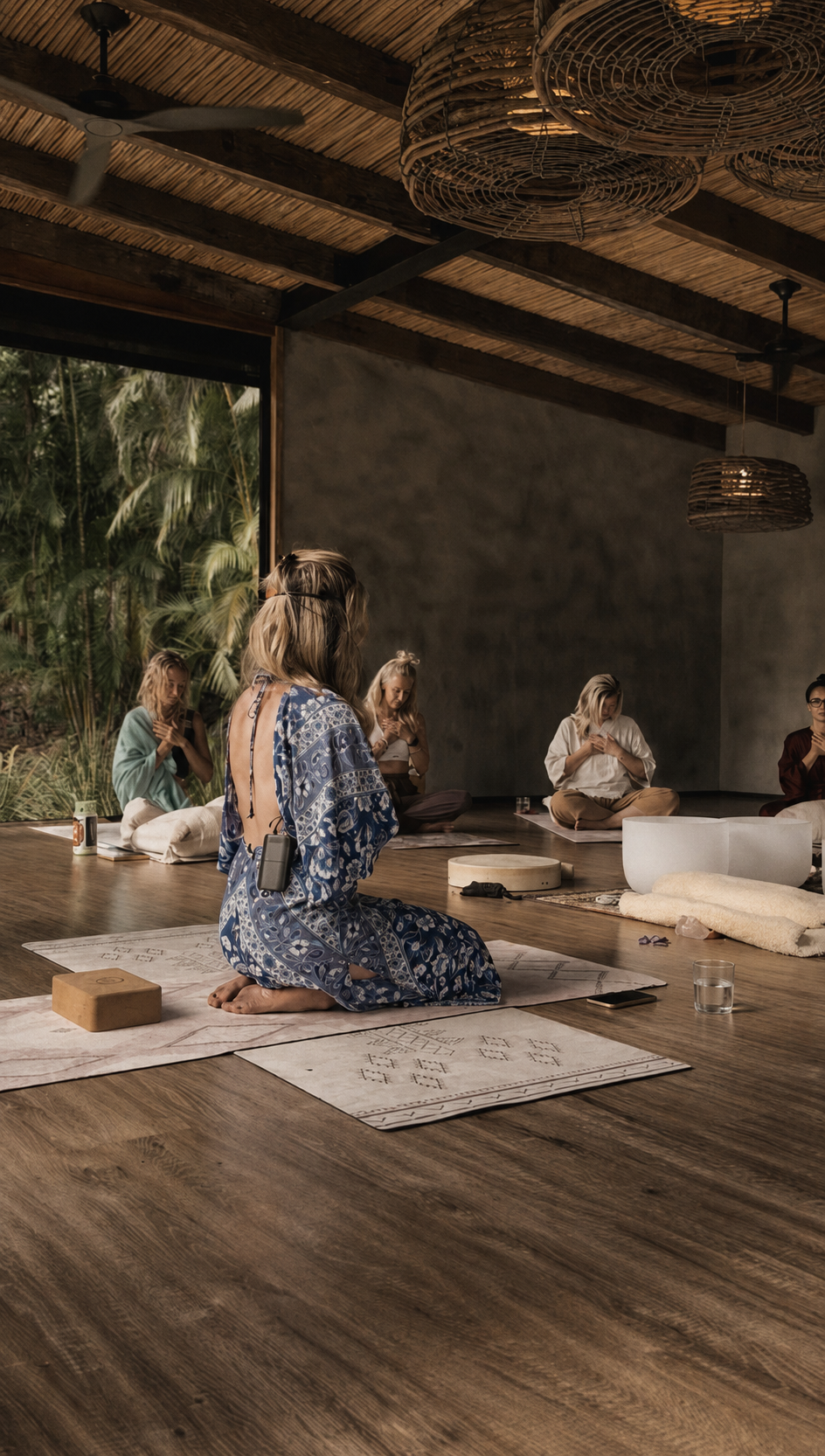
The journey begins with six weeks of live online training before moving into a multi-day in-person immersion in the Byron hinterland — allowing time for understanding to become experience, experience to become practice and practice to become embodied capability.
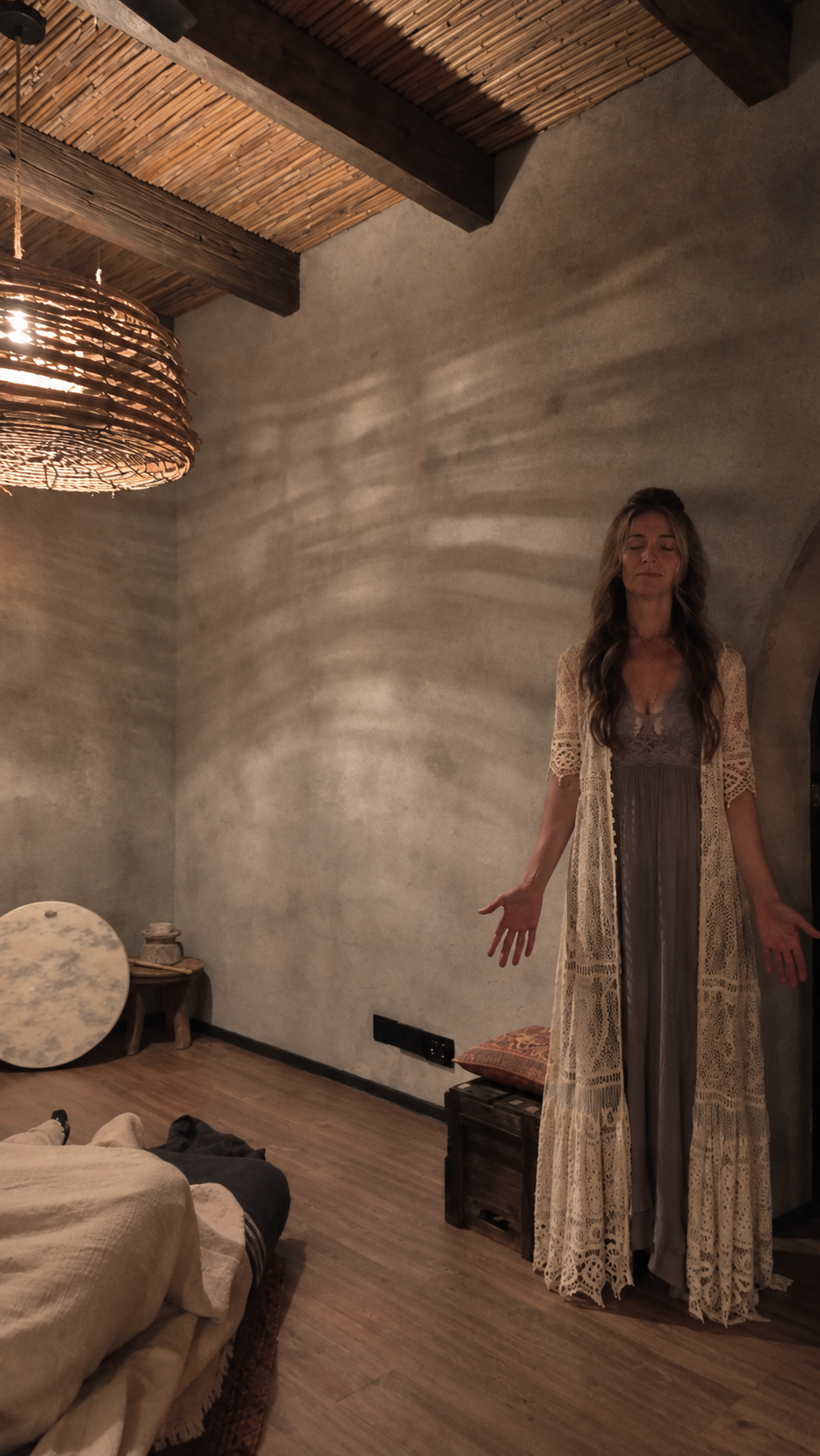
THE FOUNDATION
Learning to meet life with more of yourself.
LIVE ONLINE TRAINING · WEEK 1DELASOL PHILOSOPHY · SOUL + SOMA · ATTENTION · MULTIDIMENSIONAL LISTENING · SENSORY AWARENESS
Before we learn how to guide an experience, we begin by changing the quality of attention we bring to experience itself. The opening movement of the training introduces you to the philosophical and sensorial heart of DELASOL — an exploration of soul, soma, romance, attention and the intimacy of listening. Here, romance is not sentimentality. It is a quality of attention: a willingness to linger long enough for more to reveal itself. To become interested. To notice what might otherwise be passed over. To court life itself. Through sensory and listening practices, you begin sharpening the gateways through which you meet the world — sound, sensation, breath, beauty, nature, atmosphere, movement and silence. You practise listening inwardly and outwardly, developing greater sensitivity to your own inner and embodied experience while extending your attention into the living environment around you.
Because before we can respond, we have to notice. And this is where facilitation begins. As your listening deepens more becomes available - the nuanced xx, subtle shifts, unseen dimensions. Listening becomes more than something you do with your ears. It becomes a way of relating — to yourself, to another person, to a room, to sound, to silence, to the world around you. This is where soul meets soma — the felt, sensorial world of the body meeting the symbolic, imaginal and more-than-material dimensions of experience. You are not simply learning a modality. You are cultivating one of the foundational capacities of facilitation: the ability to perceive what is actually here.
Attention changes relationship.
Relationship changes experience.
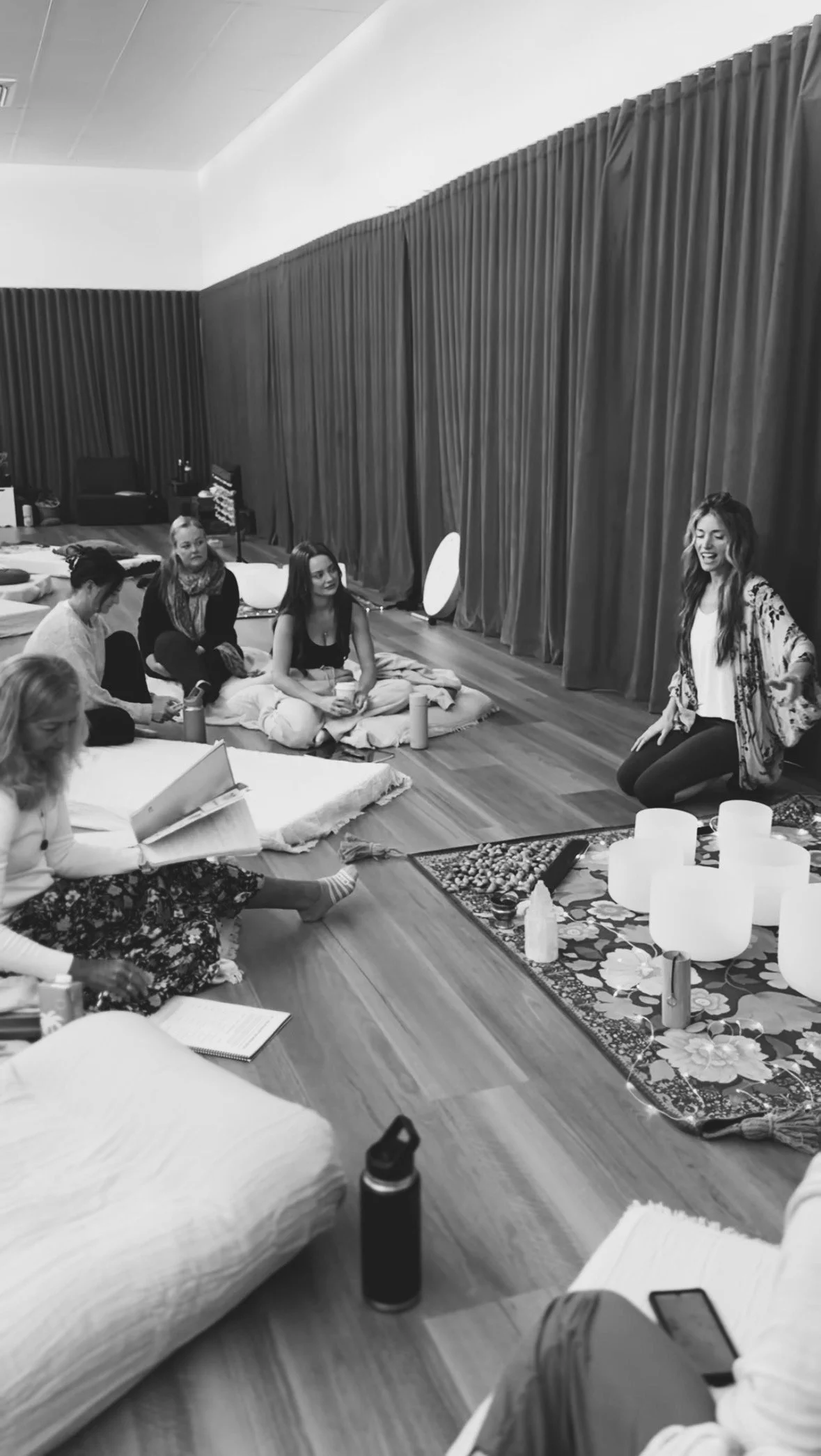
THE FACILITATOR GOES FIRST
Becoming the environment you are asking others to enter.
LIVE ONLINE TRAINING · WEEKS 2–3
NERVOUS SYSTEM · ATTUNEMENT · RELATIONAL SAFETY · CO-REGULATION · ENTRAINMENT · EMBODIED PRESENCE
From listening, we turn towards the person doing the facilitating. Because before technique, instruments or intervention comes you.
You’ll begin exploring the nervous-system and relational foundations beneath facilitation — and the subtle ways your pace, breath, voice, attention and presence are already communicating before you have explicitly guided anyone to do anything.
The facilitator is not standing outside the experience directing it. You are part of the conditions.
So the question begins to change. Not simply, How do I make people relax? But: How do I become responsive to what is actually happening?
This is where you learn to remain connected to yourself while becoming increasingly available to another person, a room and what is unfolding within it.
To recognise what belongs to you. To sense rather than assume. To prepare yourself before preparing the space. And to discover the practices that help you arrive clear, steady and available before asking somebody else to arrive.
Before asking another person to inhabit their body, we inhabit ours. Before asking them to listen, we listen.
The facilitator goes first.
THE ARCHITECTURE OF EXPERIENCE
Giving experience shape.
LIVE ONLINE TRAINING · WEEKS 4–6
sound · voice · breath · silence · The Sound Arc™ · guided experience
Now we turn everything you’ve been cultivating towards the craft of facilitation itself. What are we actually creating when we guide an experience? You’ll begin to understand attention as an architecture — something that can gather, narrow, widen, descend, rest and return — and explore how voice, language, breath, silence and sound shape the way an experience unfolds.
This is also where we enter more deeply into sound itself: vibration, resonance, rhythm and the ways sound meets body, nervous system, perception and the less tangible dimensions of human experience. Not simply, What sound should I make? But: What is this sound doing here?
You’ll learn The Sound Arc™, DELASOL’s nervous-system-aware architecture for guiding a complete sound-led experience — from the first moments of arrival, through immersion and silence, and into the often-overlooked art of return. Alongside this, you begin finding your own voice. Not learning to sound like a facilitator, but discovering what it feels like to inhabit your own words — to guide without over-directing and leave enough space for somebody to actually have the experience you have invited.
Because a well-held experience doesn’t simply begin when the first bowl sounds, or stop when the last one fades.
It has an architecture.

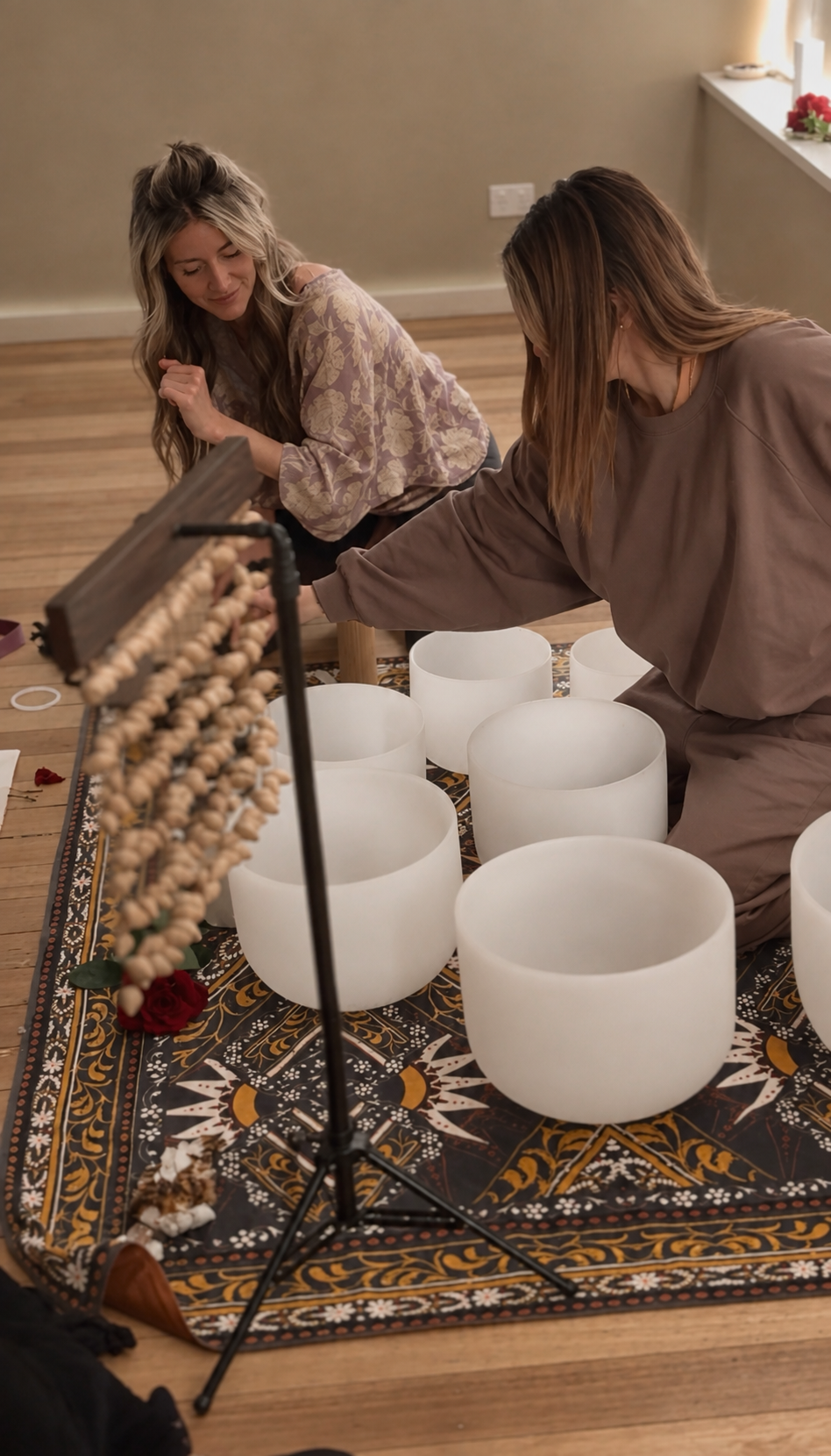
IMMERSION & INTEGRATION
The work moves into your hands.
IN PERSON · BYRON HINTERLAND · 3-DAY IMMERSION
HANDS-ON SOUND PRACTICE · MUSICALITY · FACILITATION LABS · LIVE PRACTICUM · INTEGRATION
Everything you have been learning now becomes lived experience.
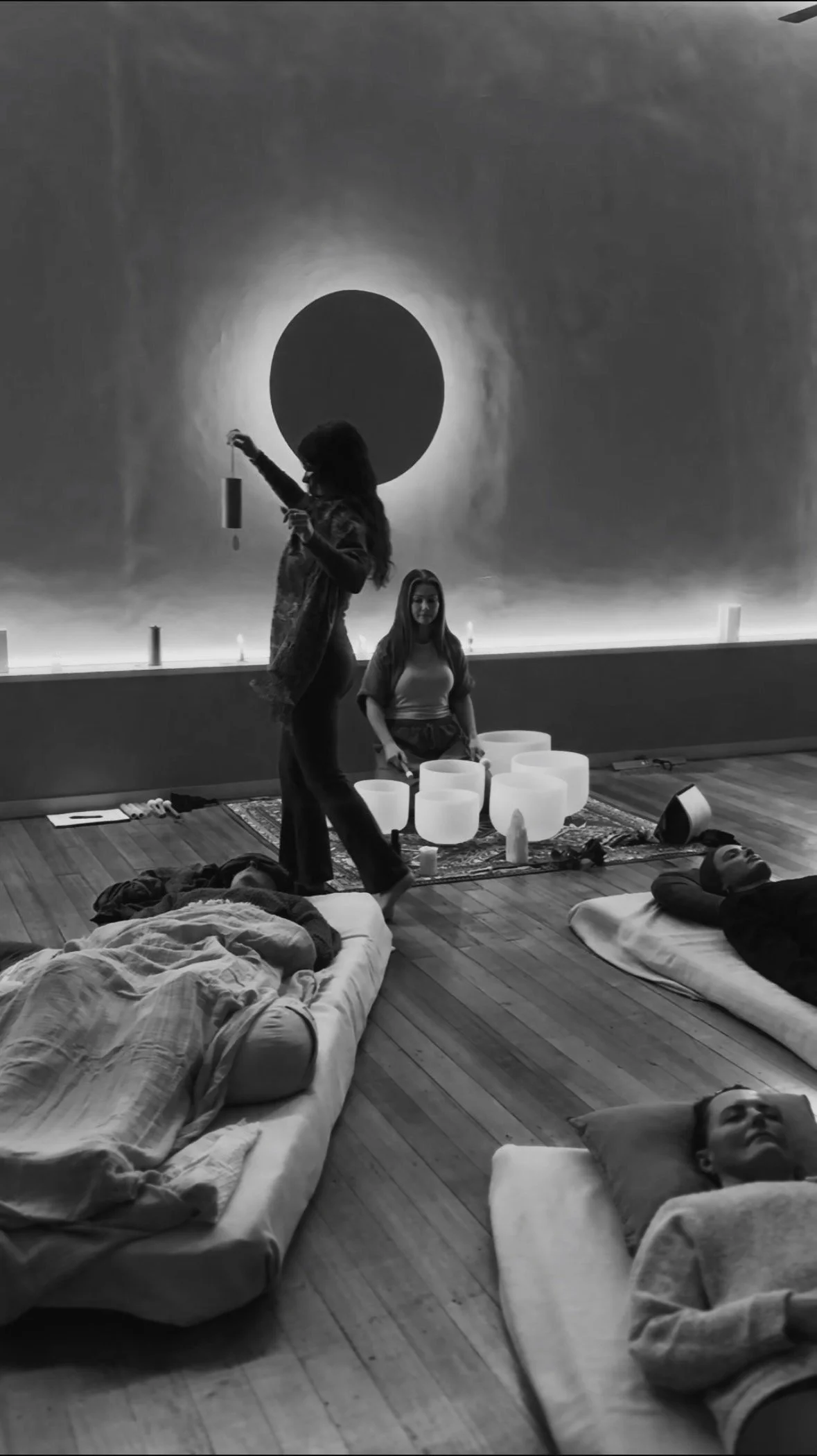
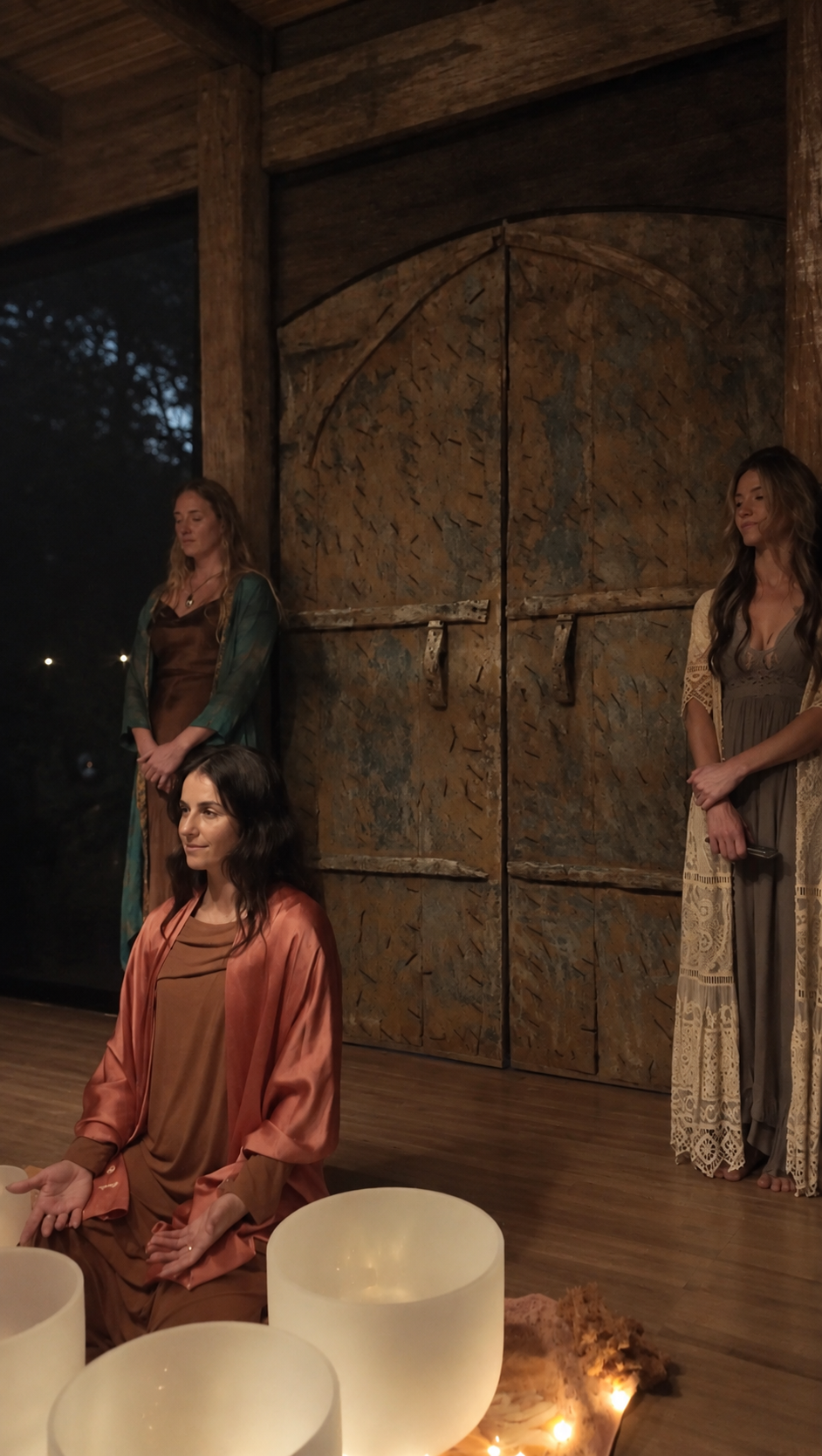
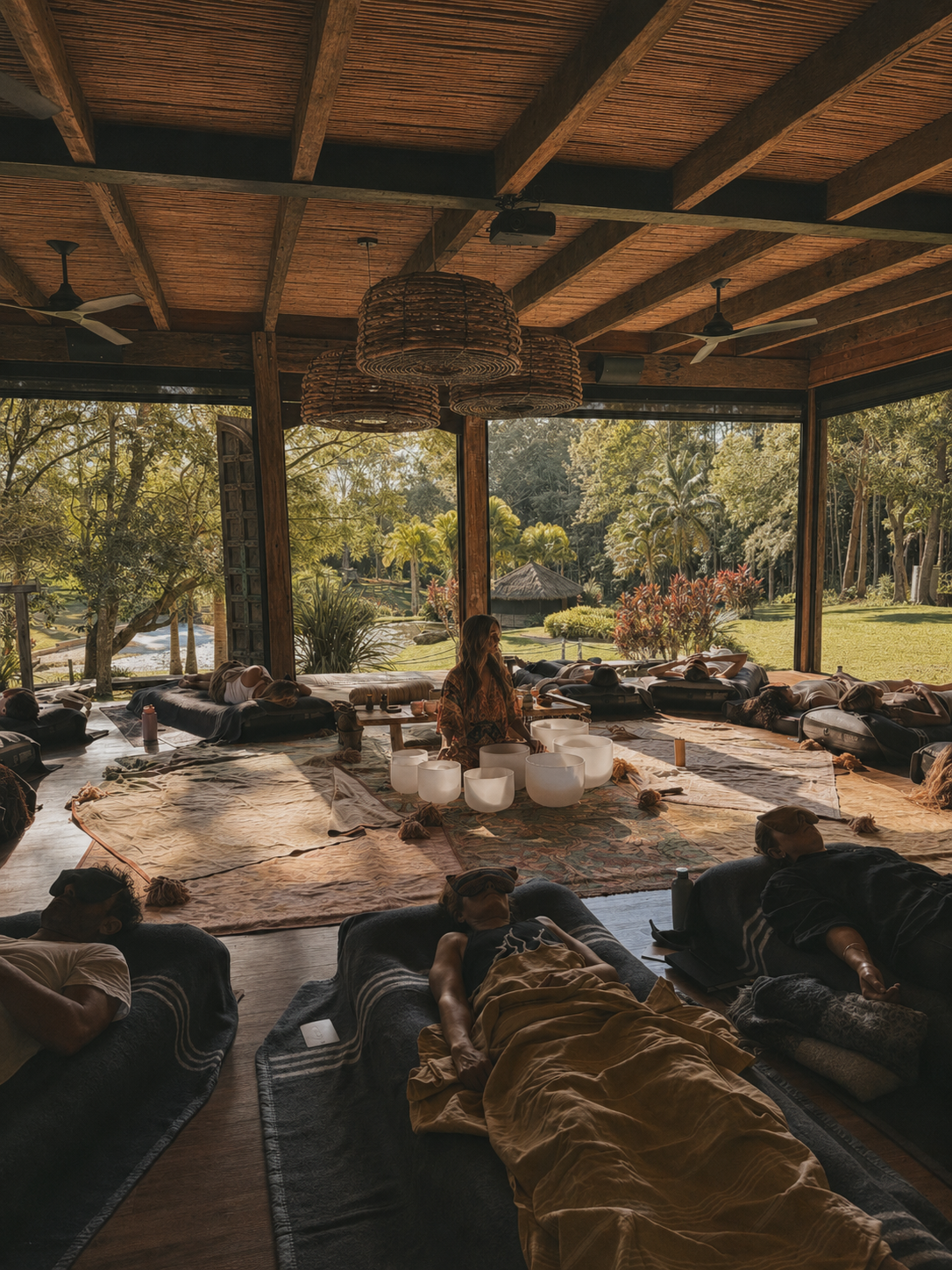
We gather in the Byron hinterland for an immersive few days of sound, practice, experimentation and facilitation. This is where the architecture begins to leave the page and enter the body.
Listen. Play. Guide. Receive. Observe. Respond. Try again.
With the instruments finally in your hands, you begin developing your own relationship with sound — exploring musicality, rhythm, resonance, silence and the subtle art of listening while you play. But the deeper practice is facilitation. Through live labs and collaborative practice, you move between facilitator, receiver, observer and collaborator — discovering what changes when there is no script to hide behind and a real room in front of you. What am I hearing? What is happening here? What does this moment need? Do I add something — or leave space?
The training culminates in a live integration experience: the cohort coming together to create and facilitate a complete sound-led journey for real receivers. Not simply learning how to facilitate. Actually facilitating. You leave with something theory alone cannot give you: a reference point in your own body.
I have stood at the front of the room. I have used my voice. I have played. I have listened. I have responded.
You no longer have to imagine who you might be when the moment comes.
You have met yourself there.
LEVEL ONE CURRICULUM
A multidisciplinary foundation in the art of sound-led, embodied facilitation.
-
Presence, self-awareness, regulation and the inner ecology of facilitation.
Learn to recognise what you bring into a room — your state, assumptions, impulses, edges and patterns — and develop the capacity to stay with yourself while being with others.
Explore Embodied Sovereignty, self-regulation, relational presence and the foundational DELASOL principle:
The facilitator goes first.
Before you ask another person to arrive, you arrive.
Before you ask them to inhabit their body, you inhabit yours.
Before you ask them to listen, you listen.You learn to work with your own state, attention and inner ecology — because the quality of your presence becomes part of the experience you create
-
Develop listening as a multidimensional facilitation skill.
Explore sensory awareness, internal and external listening, environmental attunement, subtle perception and the ability to notice shifts without immediately assigning meaning to them.
Learn to listen not only for sound, but for what is happening.
-
Develop a grounded understanding of nervous-system states, co-regulation and the conditions that can support safety, agency and presence.
Learn to recognise signs of activation and overwhelm, work with pacing and choice, and understand why facilitation is not about forcing people into a particular state.
Relationship before intervention.
-
Learn how attention shapes experience — and how voice, language, silence, sensory cues and breath can help gather it.
Explore the architecture of meditation, invitational language, cadence and the movement from relying on scripts towards speaking from relationship with what is actually happening.
The words are scaffolding. Presence brings them to life.
-
Sound is more than the instrument in your hands. Here, we begin to explore what sound actually is, how it behaves, and why it has held such a profound place in human experience.
We move between the measurable and the mysterious — exploring resonance, frequency, acoustics, entrainment, cymatics, sonic geometry and the relationship between vibration and form, alongside the ways sound has been understood and worked with across cultures, contemplative traditions and energetic frameworks.
You’ll experience sound from the inside as well as study it from the outside — noticing how rhythm, repetition, resonance and silence can shape attention, perception and felt experience.
And then, sound moves into your hands. Through crystal bowls and other therapeutic instruments, you’ll develop playing technique and musicality while exploring harmonic relationships, motifs, transitions, dynamics and silence.
Not simply learning what to play next, but learning to listen while you play — to hear how sounds meet one another, how a sonic landscape develops over time, and what the experience itself may be asking for.
Sound becomes less something you deliver, and more something you enter into relationship with.
-
Learn the DELASOL framework for architecting complete sound-led experiences from Arrival through Immersion, Silence, Field Tending, Return and Integration.
Explore how attention, sensory descent, breath, sound, silence, pacing and reorientation can work together to create an experience that feels coherent without becoming rigidly choreographed.
Architecture, not choreography.
-
Move from following a plan towards facilitation that is perceptive and responsive.
Learn to track the room, recognise emerging information, distinguish observation from interpretation and develop the discernment to know when to guide, when to adapt and when to leave space.
Because the question gradually changes from:
What comes next?
to:
What is happening now?
-
Bring the pieces together through facilitation labs, peer practice, feedback, collaborative composition and real-world experience.
Explore consent, scope of practice, participant agency, professional boundaries, accessibility, opening and closing experiences, and the practical considerations of beginning to facilitate your own sessions.
The aim is not simply to know more.
It is to become able to facilitate.
-
The training continues between the sessions.
Through Embodied Sovereignty, personal practice, self-inquiry, listening exercises, ritual and integration practices, you’ll be invited to deepen your relationship with your own body, attention and inner world.
This is not homework for the sake of completing a course. It is part of becoming the kind of facilitator this work asks you to be.
Because we cannot sustainably invite others into places we are unwilling to meet within ourselves.
The facilitator goes first.
This Training Develops
PRESENCE · LISTENING · PERCEPTION · DISCERNMENT · RESPONSE-ABILITY · EMBODIED CONFIDENCE
PRESENCE · LISTENING · PERCEPTION · DISCERNMENT · RESPONSE-ABILITY · EMBODIED CONFIDENCE
There is a difference between learning the instruments and learning to facilitate.
Built From Real Rooms
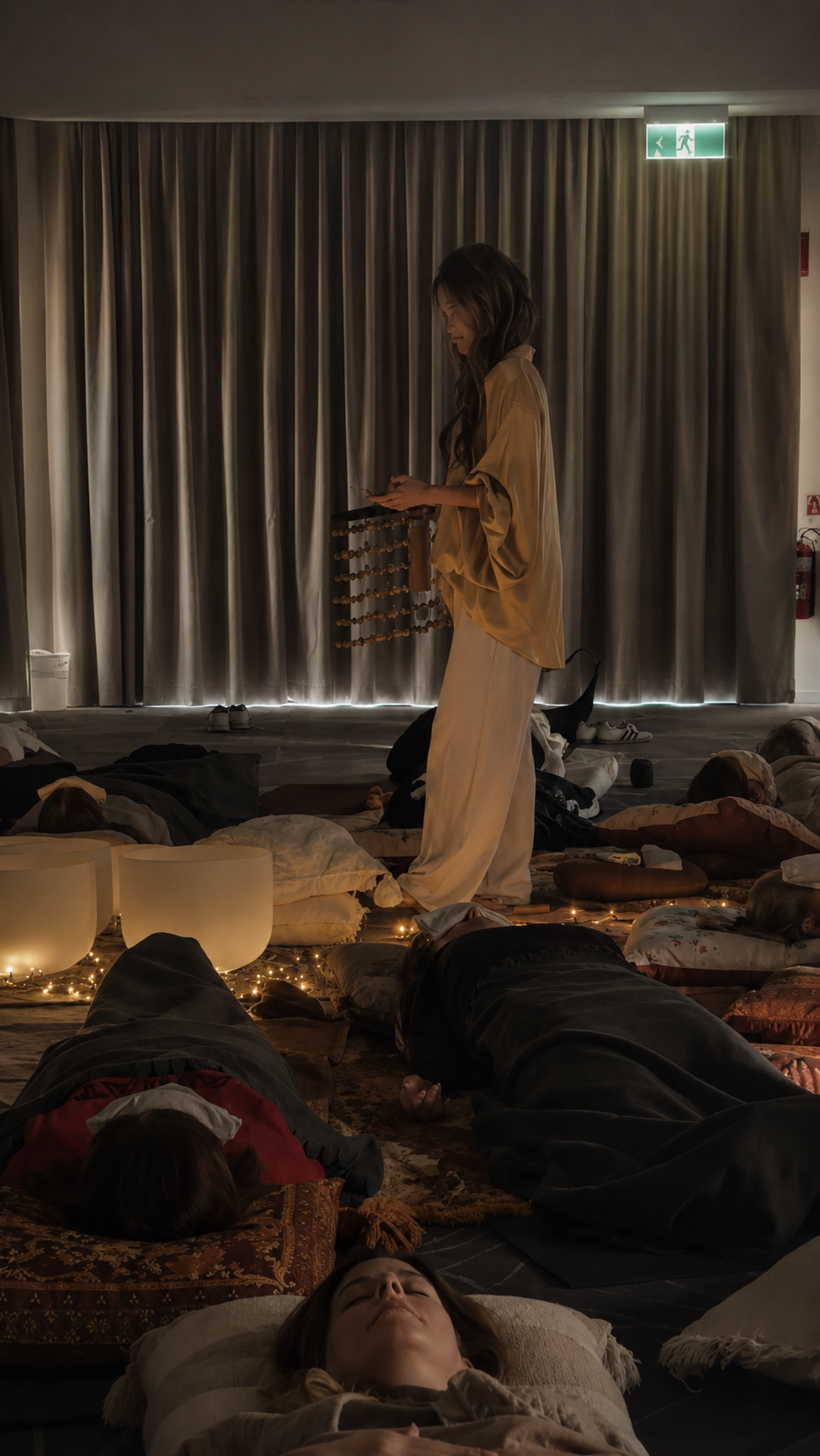
For more than two decades, my work has moved through movement, yoga, mindfulness, breathwork, sound, somatics, energetics and embodied practice.
For more than a decade, I have also facilitated within a private mental health and addiction rehabilitation setting — an experience that has brought me into relationship with an extraordinary diversity of people, nervous systems and states of being. Those rooms have been some of my greatest teachers.
They taught me that technique can give you a framework, but it cannot tell you what is needed now. That requires presence. Perception. Discernment. Relationship. Response-ability.
SOUND & SOMATICS has been shaped by that lived experience — and by a deep respect for the complexity and nuance of trauma, nervous-system states and the human beings behind them.
HOW THE TRAINING UNFOLDS
-
Over six weeks of live online teaching, we begin with the foundations beneath the facilitation.
Before sound is placed in your hands, we explore the person who will be holding it: your presence, nervous system, attention, perception, voice and capacity to listen.
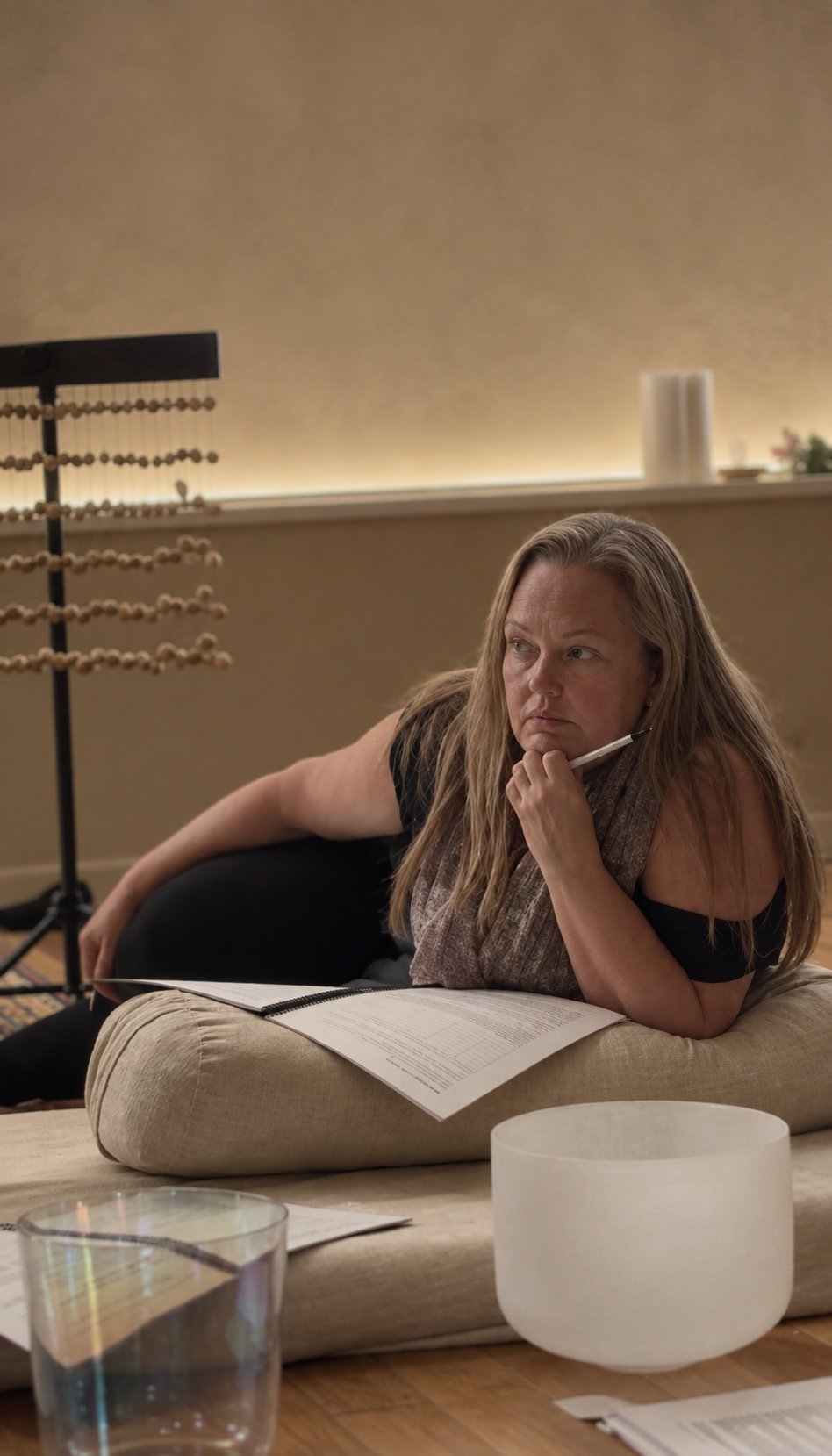
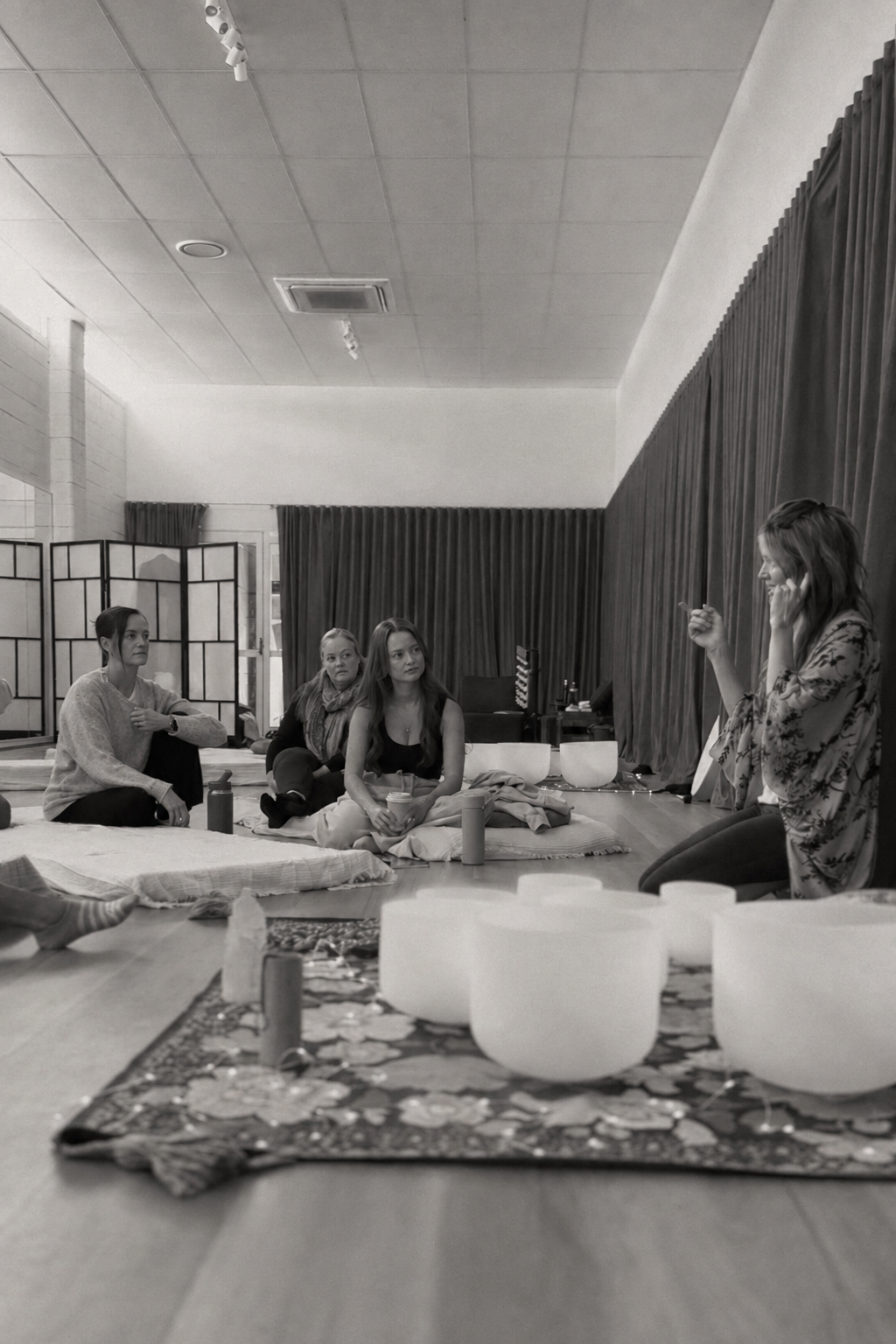
Through teaching, experiential practices, live demonstrations and discussion, you'll begin developing the frameworks and understanding that underpin the DELASOL approach to sound-led facilitation.
This is where we build the map.
Then, gradually, we begin to inhabit it.
-
This training asks you to become a participant in the work, not simply a student of it.
Between sessions, you'll be invited into practices that deepen your relationship with your own body, attention, nervous system, senses and inner world.
Meditation. Deep listening. Embodied Sovereignty. Sensory explorations. Sound inquiry. Reflection. Ritual. Time in nature.
Not homework for the sake of completion.
A way of developing the instrument you will eventually facilitate through.
Because the facilitator goes first.
-
Understanding something and being able to embody it in a room are very different things.
Throughout the training, you'll begin experimenting with what you're learning: guiding attention, using your voice, practising breath and sensory cues, working with silence, opening and returning an experience, and learning to respond without reaching automatically for a script.
There is room to try things. To be witnessed. To receive feedback. To try again.
Confidence isn't something we wait to feel before we practise.
It is something practice begins to build.
-
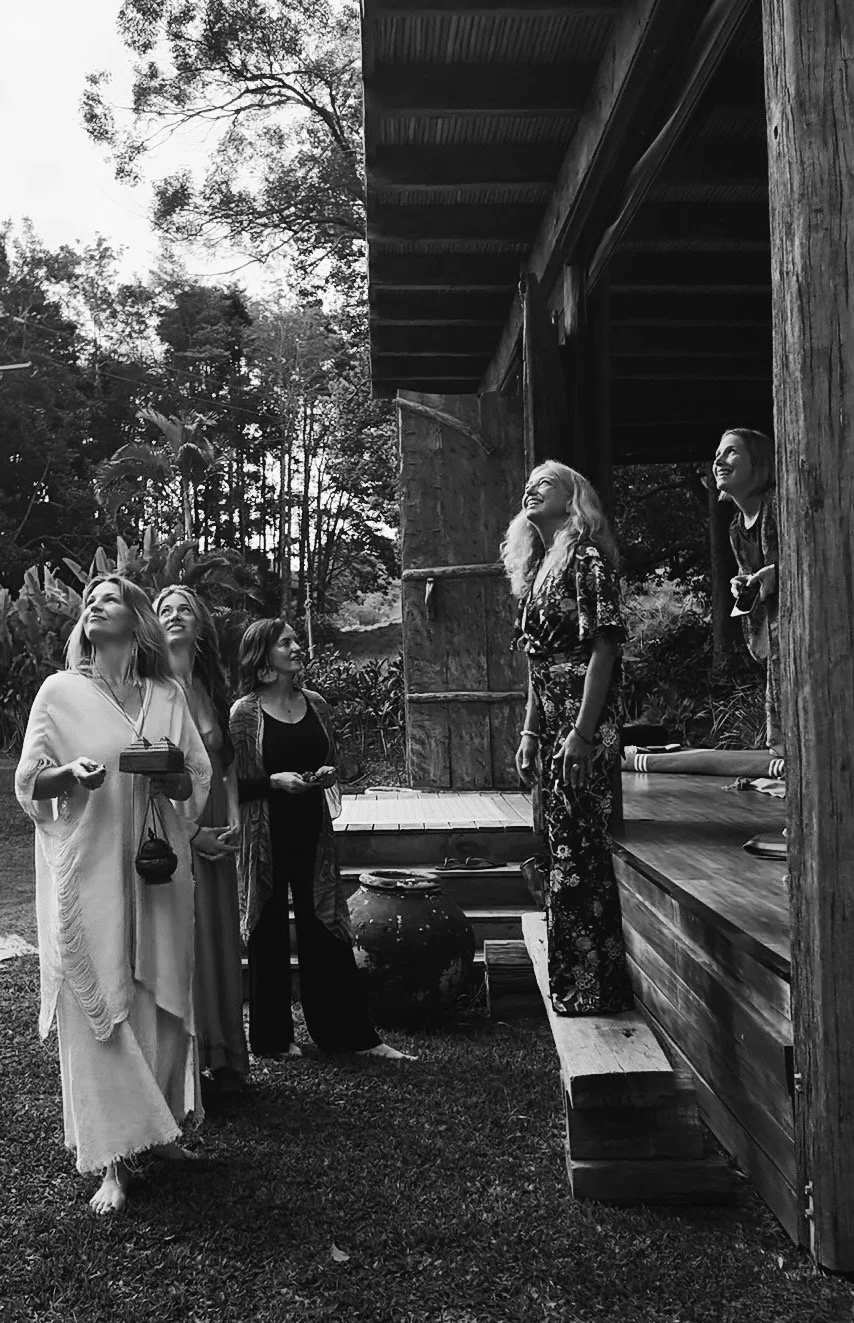
Then we gather in the Byron hinterland for 3.5 days and put the learning into our hands.
The immersion is where SOUND & SOMATICS becomes tactile, relational and alive.
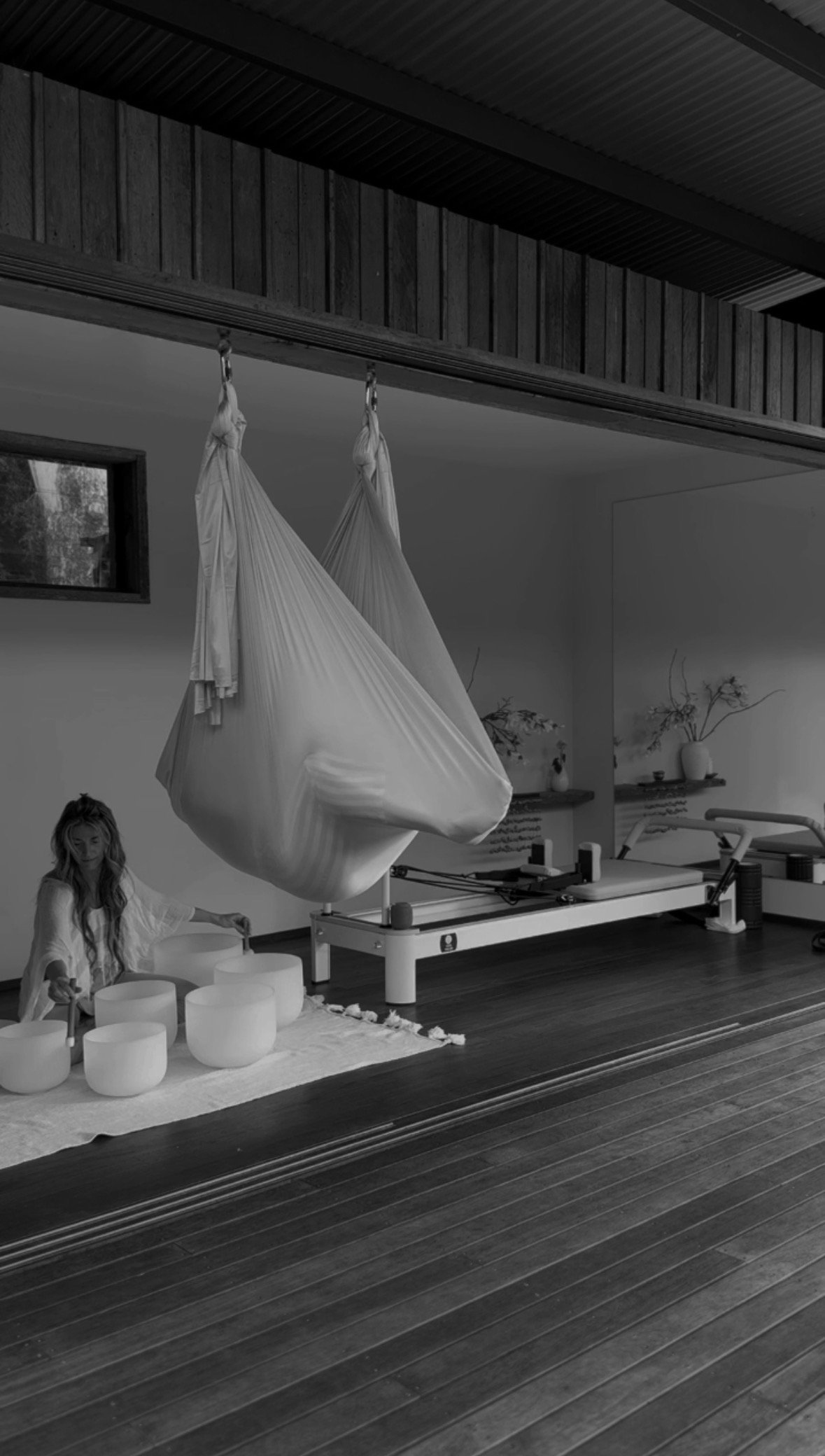
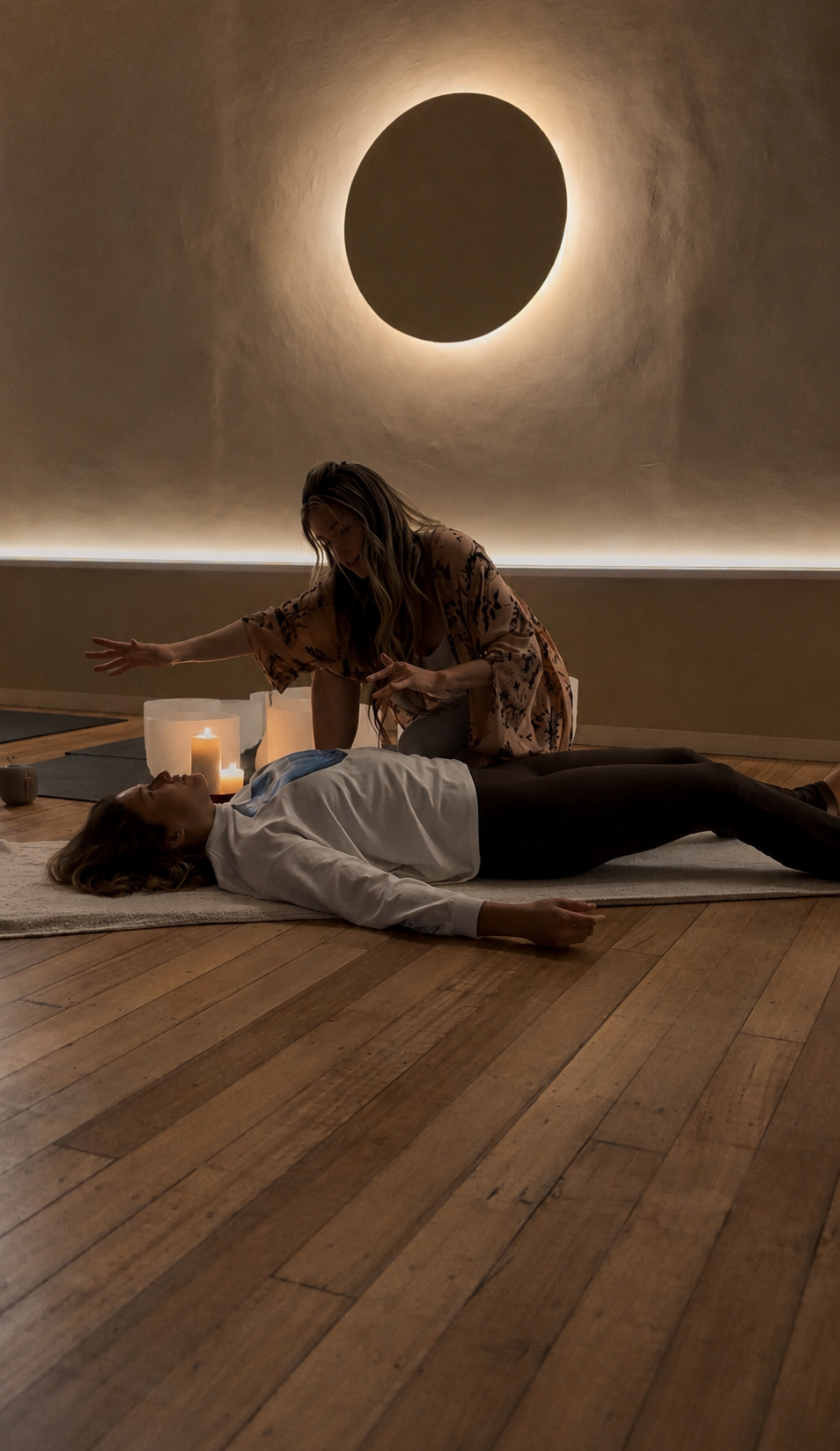
You'll listen, play, experiment, observe, collaborate and facilitate — developing your relationship with the bowls, resonance, harmony, musicality, silence, transitions, the room and one another.
There are demonstrations and teaching, but there is also something that can't be learned by watching:
repetition, relationship and experience.
This is where the map begins to become instinct.
-
The training culminates in the transition from practising facilitation to actually facilitating.
Together, the cohort co-creates and holds a complete sound-led experience for a real audience, supported by Brieann throughout the process.
You learn what happens when the plan meets the room.
When you have to listen.
Adapt.
Trust one another.
Trust yourself.
For the founding cohort, this became one of the most significant moments of the entire training — the point at which learning became lived evidence:
I can actually do this.
-
Certification is not the end of becoming a facilitator.
Following the training, you'll continue to have access to the teaching materials and recordings so you can return to the frameworks with the perspective that only experience can give you.
There is space to reflect, integrate, ask questions and identify the edges that now need practice.
Because Level One isn't designed to make you feel as though there is nothing left to learn.
It is designed to give you enough foundation, experience and self-trust to keep learning well.
NEXT COHORT · OCT · BYRON HINTERLAND + ONLINE · $2800 AUD
WHAT YOU LEAVE WITH
The practice becomes yours.
By the end of Level One, you will have the architecture, practical experience and embodied reference points to facilitate a complete sound-led experience of your own. You’ll know how to work with sound, silence, voice, pacing and sensory attention with intention; how to create coherent beginnings, thresholds and returns; How to read a room and respond to what is actually happening. How to create the conditions for people to soften, regulate, release and return to themselves—without forcing an outcome. Less reliance on scripts. Less performing the role of facilitator. More capacity to listen, trust and respond. You will have stood at the front of the room. Listened. Played. Guided. Adapted. You will know what it feels like to hold people well—and facilitate from inside the experience.
And what you tend here takes root
The sensitivity you cultivate as a facilitator begins to find its way into your own life. You become more attuned to your body. More responsive to your nervous system. More discerning with your energy—and more perceptive of the beauty, texture and aliveness already around you.
And in some quiet, almost mysterious way, it begins to touch everything — Conversation. Relationship. Creativity. Intuition. Leadership.
Perhaps this is the deeper transformation inside the training:
You don't only learn how to hold an experience.
You become more available to experience itself.
“Brieann created such a beautiful, safe and nurturing space for us to explore, learn and grow.
The meditations, Q&As, teachings and constant support made this experience so much more than just a course.
She has given me the confidence, knowledge and belief in myself to finally step forward and follow this path that has been calling me.
I’ve had all my bowls and instruments sitting here, waiting patiently for this moment.
And now I feel it. I’m ready.”
— Loren Smith
Where This Work Can Take You
-
![]()
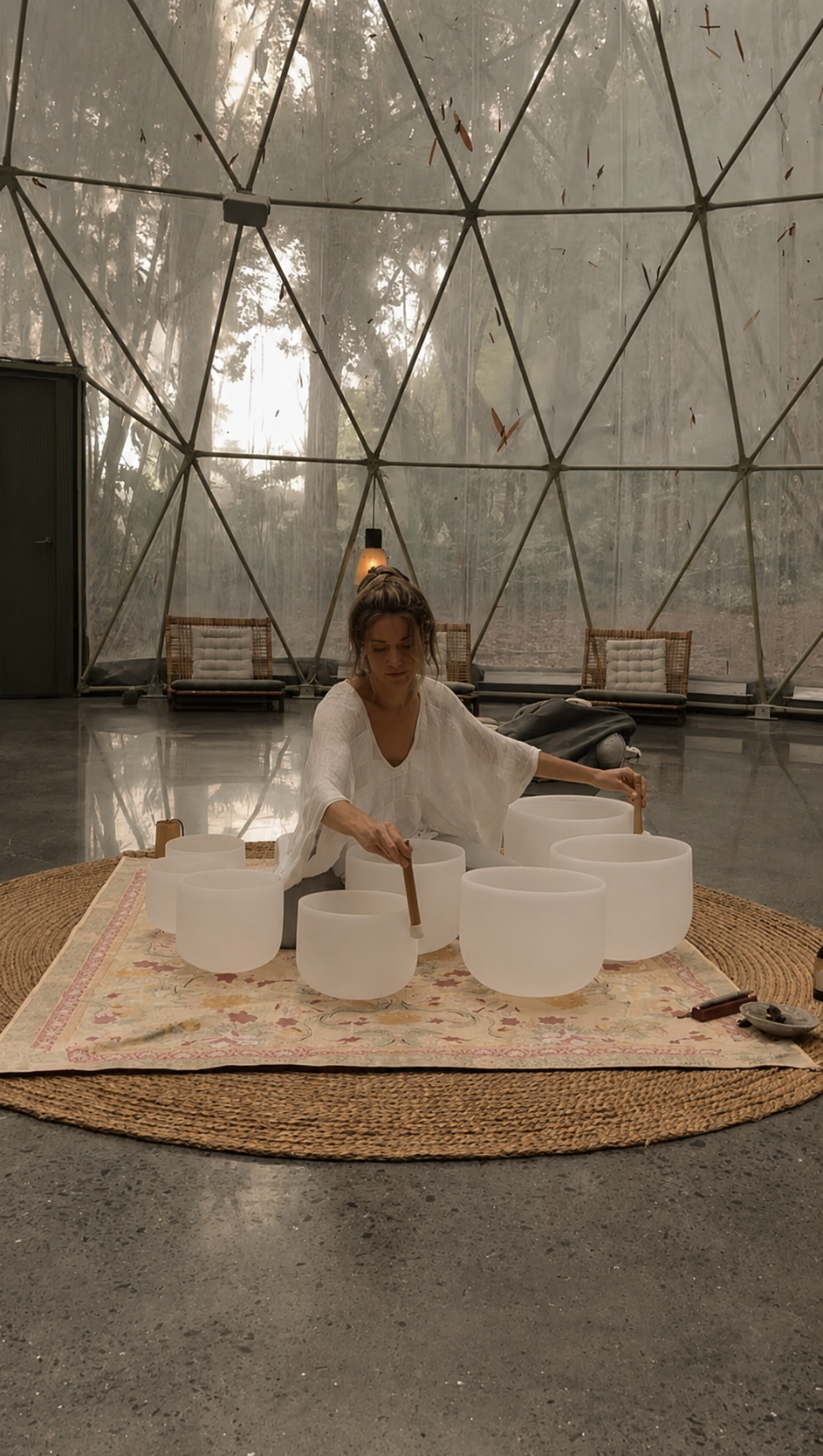
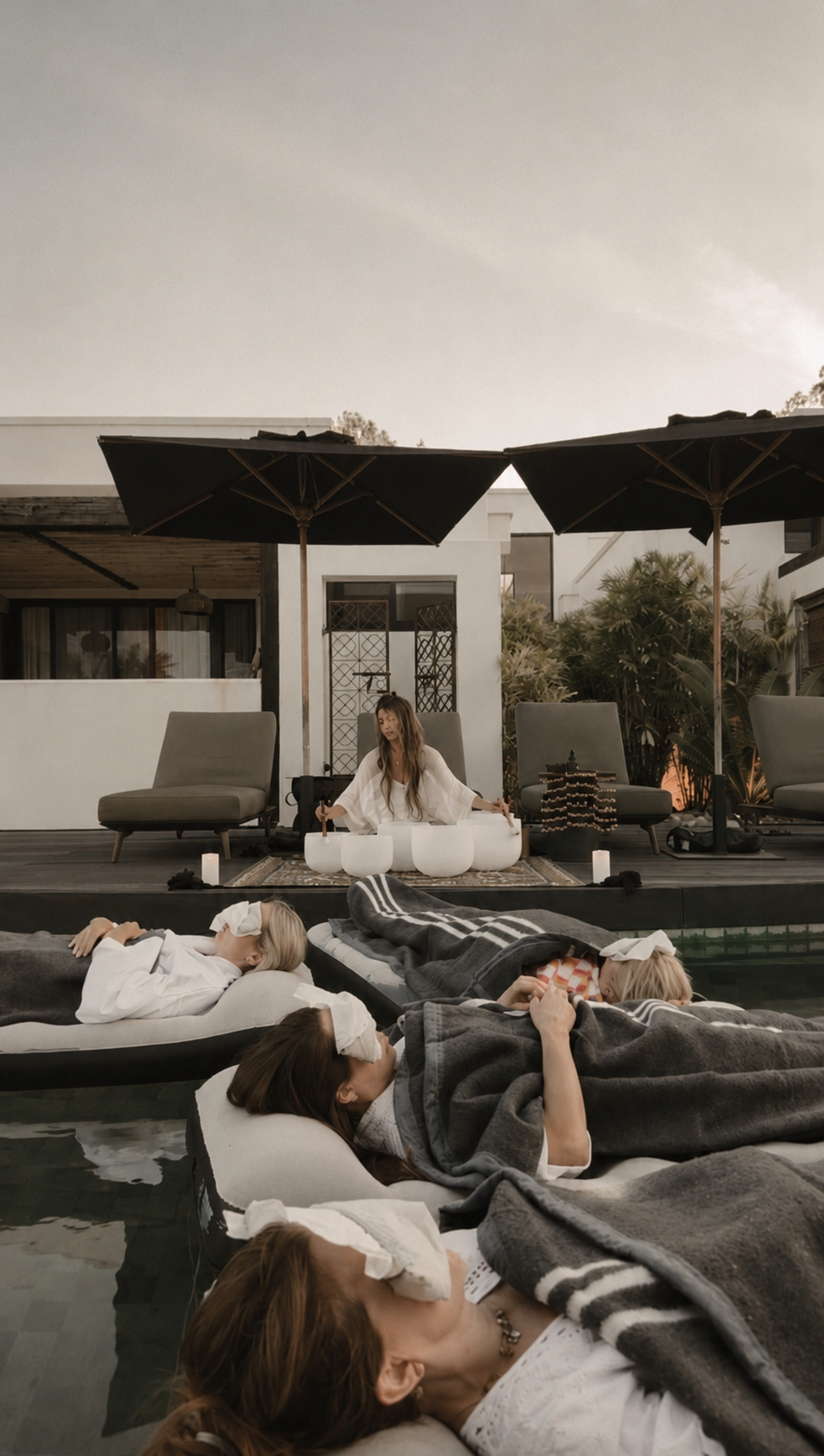
RETREATS: Facilitate luxury retreats, wellness events and transformational experiences in beautiful spaces.
-
![]()
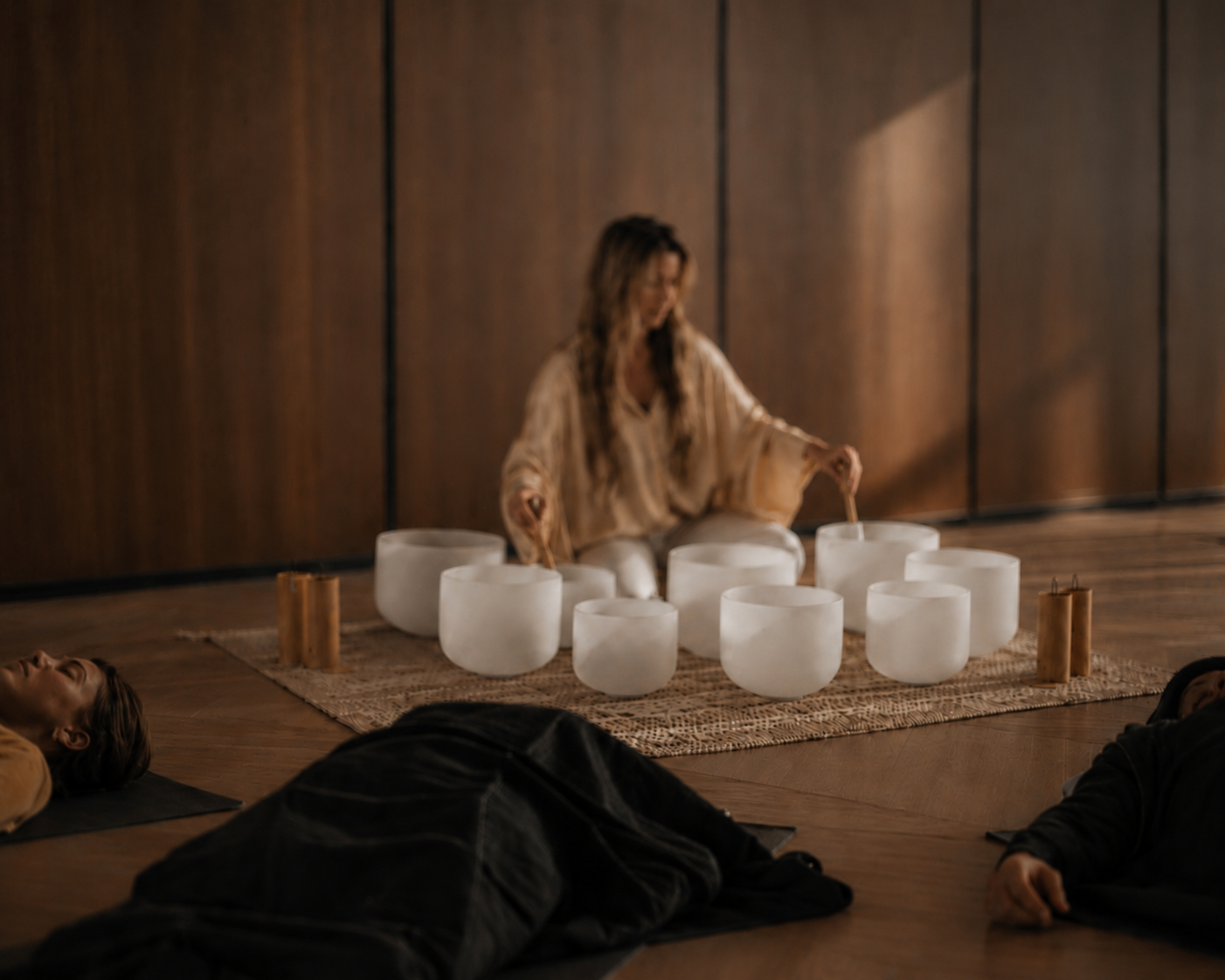
STUDIOS: Facilitate intimate experiences in yoga studios, wellness spaces and private home studios.
-
![]()
PRIVATE SESSIONS: Weave sound into coaching, bodywork, energy healing and 1:1 client work.
-
![]()
CREATE YOUR OWN EXPERIENCES: design workshops, sound journeys and experiences that reflect your unique style.
-
![]()
CORPORATE: Bring sound into workplaces, leadership retreats and team wellbeing programs.
-
![]()
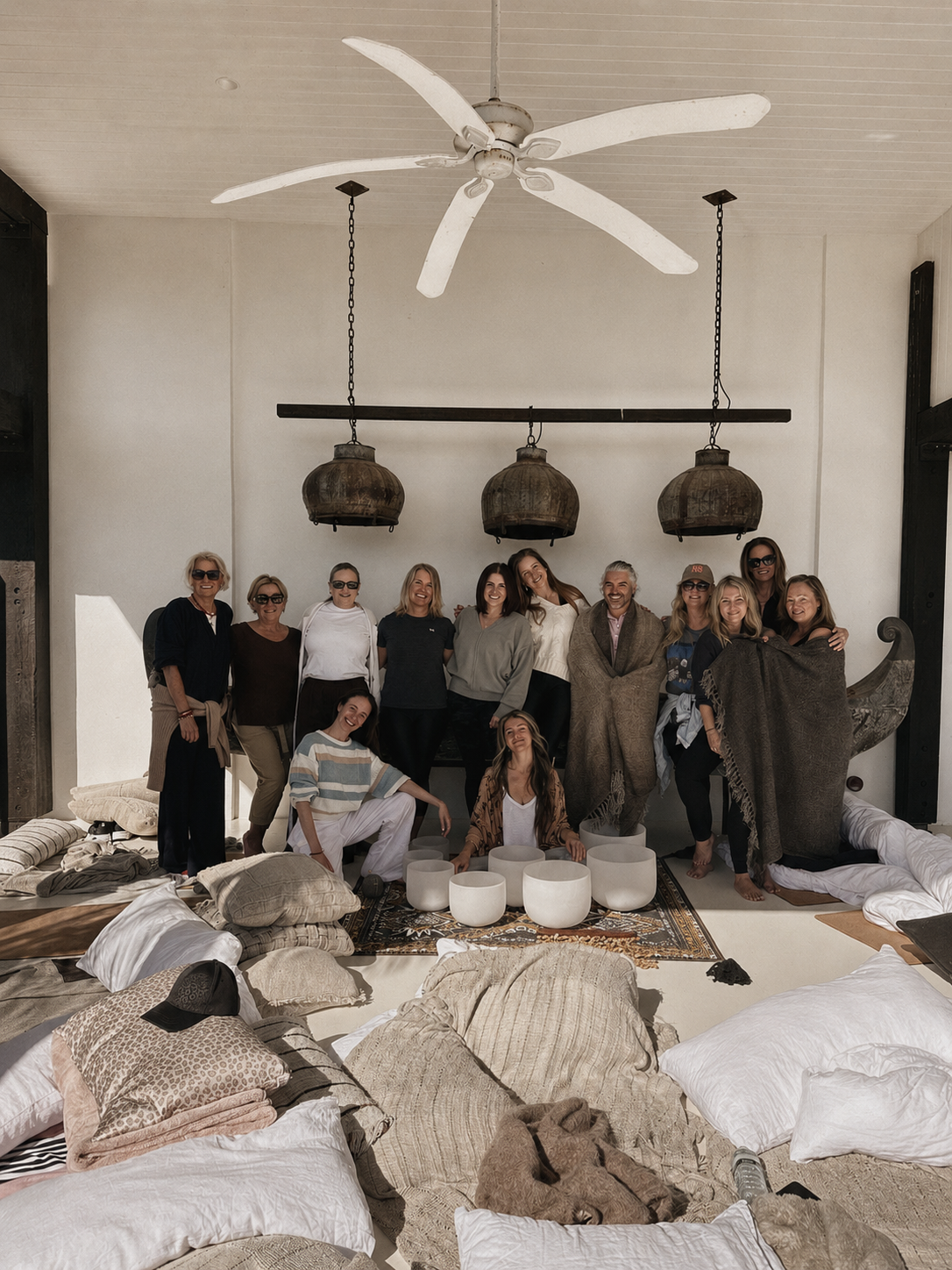
COMMUNITY: Find your people. The training may end, but the friendships and support often continue long afterwards.

DATES + INVESTMENT
LEVEL ONE · JANUARY 2027
Five weeks online · Byron Hinterland immersion · Post-immersion integration
Standard Investment · $2,800 AUD
Payment plans available.
Includes:
6-week Online Facilitation Training
Embodied facilitation, nervous-system foundations, deep listening, voice, sensory awareness and The Sound Arc™.
1
3-day In-Person Immersion
An intimate, hands-on immersion in sound, voice and facilitation—moving between practice, receiving, observation and ensemble work in carefully chosen spaces.
2
DELASOL™ Level One Manual + Student Resource Library
Your Level One manual, guided practices, meditations, rituals, thematic take-aways, additional resources and a rabbit hole for the curious—designed to deepen the work between sessions and long after the training ends.
3
Ongoing Feedback + Q&A
A dedicated space to bring questions, submit work and receive feedback as your practice and facilitation style begin to take shape.
4
Live Community Practicum
The training culminates in a complete sound-led experience, held by the cohort for the wider community in a beautiful retreat setting—with proceeds supporting ocean health.
5
DELASOL Method Level One Certification
Certification in Sound-Led Facilitation, marking the completion of your Level One training and practicum.
6
There is a depth to this work
that exists beyond technique
In this training, you’ll learn how to work with your own state— so your presence becomes the anchor for the entire room.
THE SOUND & SOMATICS PATHWAY
LEVEL ONE — SOUND-LED FACILITATION
Level One is the foundation.
Through sound, you learn the deeper practice of embodied, relational facilitation: presence, perception, nervous-system awareness, sensory attention, attunement, voice and the architecture of a well-held experience.
These are not sound-specific skills. They are the foundations beneath the wider DELASOL Method™—designed to travel with you as your practice deepens.
WHERE THE PATHWAY LEADS
Level Two moves further into energy medicine, breathwork and deeper nervous-system-led practices, alongside the art of weaving multiple modalities into coherent experiential journeys.
Advanced pathways will continue into more nuanced dimensions of embodied facilitation, integration and the craft of holding increasingly layered experiences. Because as the work deepens, so does the responsibility of the person holding it. Before greater intensity, sensitivity. Before complexity, capacity. Before learning to take people deeper, we learn to hold them well. Level One begins there.
“If you want to move beyond the theory and actually gain hands-on experience
in a gentle, supportive, and empowering environment,
this is the training to take.”
Kerrie
If something in you has been waiting to step into this work — this is your invitation. Deepen your capacity to listen, lead, and facilitate from a place of grounded presence.
Final Note
There are many ways to learn a modality. There are far fewer opportunities to learn how to truly hold a room — to stay present when someone is emotional, to trust yourself when an experience doesn’t go to plan, and to listen deeply enough to know what may be needed next.
This is not a training in performing transformation. It is a practice in becoming the kind of facilitator who can meet what is actually there. Safety without control. Depth without force. Structure without rigidity. Because our role is not to make transformation happen. It is to create the conditions in which change becomes possible. And those conditions are created through relationship.
And as you learn to guide others, something shifts in you too. You become more perceptive. More responsive. More able to trust what you notice, what you feel, and what you know.
If something in you has been recognising itself throughout these pages, perhaps that isn’t accidental.
Perhaps it’s time to step into the role you’ve already been moving towards.
IN THEIR WORDS…
Frequently Asked Questions
-
Absolutely.
Naturally, many students join specifically to bring sound, nervous system awareness, and embodied facilitation skills into work they are already doing.
The principles taught throughout the training translate beautifully into other modalities, retreats, workshops, coaching, movement spaces, wellness practices and private sessions.
-
Level 1 focuses on sound-led facilitation, nervous system awareness, journey design, presence, and group space holding.
Future trainings will offer deeper exploration into breathwork, somatic processes, energetic bodywork, subtle energy awareness and advanced facilitation skills.
-
The in-person immersion unfolds across a small number of carefully chosen locations throughout the Northern Rivers, including Mullumbimby, Byron Bay and Newrybar. Our final community experience is held at Blue Green Sanctuary in Newrybar, around 15 minutes from Byron Bay.
There are beautiful accommodation options throughout Byron, Bangalow, Newrybar and the surrounding hinterland, from simple stays to more secluded, retreat-style spaces. You’ll receive a curated list of recommendations before the immersion.
Some participants in our founding cohort chose to share accommodation, organising themselves through the group chat. It became a lovely extension of the experience—part retreat, part grown-up sleepover. Others preferred the spaciousness of having somewhere entirely their own.
Both are welcome. Choose what will allow you to feel most at home while you’re here.
Full venue details, timings and recommendations will be shared well ahead of the immersion.
-
The immersion is designed as a spacious but full few days of learning, practice and connection across the Northern Rivers.
Most full days will begin around 9–10am and finish between 5–6pm, with a half-day (afternoon) session planned for Friday and Monday. And our final Monday experience running into the evening. Exact timings will be confirmed with the full immersion schedule before training begins.
You won’t need to bring instruments or specialist equipment. We’ll provide everything required for the practical work, along with a simple packing list closer to the weekend.
Come in comfortable clothing you can move, sit and lie down in—and expect a mixture of learning, listening, practising, facilitating and receiving.
The days are immersive, but intentionally paced. There will be space to eat, rest, connect and let the work land.
-
Yes.
All online sessions will be recorded and made available to participants.
Live attendance is encouraged where possible, but recordings will be available if you're unable to attend live.
-
The founding cohort is intentionally intimate, with numbers capped at under 10 participants.
This allows for a more personalised learning experience, deeper feedback and meaningful connection within the group.
-
That's completely normal.
In fact, many of the people who are most drawn to this work don't arrive feeling fully confident or certain.
They arrive feeling curious.
Called.
Interested.
Perhaps with a quiet sense that there is something here for them.
You don't need to have experience.
You don't need to have all the answers.
And you certainly don't need to feel "ready." In fact, you most likely won’t.
This training is designed to meet you where you are and support your growth from there.
Most participants will be meeting for the first time, many will be travelling solo, and everyone arrives with their own mix of excitement and nerves.
You'll be in very good company.
This work tends to attract thoughtful, open-hearted people who are committed to growth, connection, and learning.
You don't need to be the finished product before you begin.
That's what the journey is for.
And if you’re still unsure, you’re very welcome to book a casual, obligation-free conversation with me. Bring your questions, concerns and curiosities, and we can explore together whether this training feels like the right fit for you.
-
Yes. Level One is designed as a foundation, so no prior experience in sound, somatics, breathwork or energy work is required.
You may be completely new to facilitation, or already working across wellness, coaching, yoga, retreats or other embodied practices. We begin with the fundamentals and build progressively, giving you the understanding, practical experience and embodied reference points to develop from wherever you are starting.
-
Do I need my own singing bowls?
No. All instruments needed for the in-person immersion are provided.
You’ll have plenty of opportunity to play and experience different quartz and crystal singing bowls and other therapeutic instruments—without needing to invest in your own before you know what you’re drawn to.
We’ll also explore what to look and listen for when choosing instruments, with purchasing recommendations, student discounts and equipment hire options shared where available.
And while the instruments matter, they are only one part of the practice.
The deeper instrument you’re learning to work with is you.
-
A significant part of the training is experiential. You’ll practise, facilitate, receive, observe, experiment and receive feedback throughout both the online training and in-person immersion.
The intention is simple: you leave having actually done the work and facilitated sessions not simply learned about it.
-
Almost everyone is.
There’s no expectation that you arrive confident. Learning to work with nerves, self-doubt and the vulnerability of being seen is part of becoming a facilitator.
You’ll build confidence the way it is actually built: through practice, repetition, feedback and supported experience—not by waiting until you feel ready.
In our founding cohort, students who began by rating their facilitation confidence as low as 1–2 out of 10 finished the training reporting confidence levels of 8–10 out of 10.
You don’t need to arrive confident.
You come here to build the experience that confidence can stand on.
-
Not at all.
Some students join with the intention of offering professional sessions.
Others join for personal growth, deeper embodiment, or to bring these skills into existing work.
There is no expectation that you facilitate professionally during the live, public event sceduled during the immersion weekend. Or that you facilitate professionally after completing the training, unless you desire to.
-
Yes.
Upon completion of the training, students will receive a Certificate of Completion in Sound & Somatics Facilitation Training (Level 1).
This certification recognises your successful completion of the training and your demonstrated understanding of the core facilitation principles taught within the program.
-
Confidence is one of the things we deliberately build throughout Level One—not through theory alone, but through repetition, feedback and the experience of actually facilitating.
By the end of the training, you will have guided, practised, adapted, worked with real-time feedback and facilitated a complete sound-led experience. You leave with something confidence needs: evidence in your own body that you can do this.
In our founding cohort, students who began by rating their facilitation confidence as low as 1–2 out of 10 finished reporting confidence levels of 8–10 out of 10.
The aim isn’t to leave knowing everything.
It’s to leave knowing you can begin.